
Last updated November 22, 2026
 Sweep & inspection
 Caps & crowns
 Flue relining
 Masonry repair
 Gas fireplace service
Level 1 sweep and inspection to the NFPA 211 annual standard - flue, crown, cap, and flashing checked and photographed
Chimney sweep logs do not sweep chimneys. They loosen some creosote - which then falls where a brush and vacuum still have to collect it.
Chimney Cleaning Emergency Preparedness Guide for Highland Creek Homes
A chimney fire sounds like a low roar and smells like burning cardboard, and most homeowners who experience one don’t recognize it for the first several minutes. That delay matters. The first five minutes of any chimney emergency decide whether you contain the problem or make it worse. This guide treats preparedness as a process you set up before burn season, not a panic plan you invent in the moment. You’ll learn how to recognize a chimney fire in progress, what to do before emergency services arrive, how to tell a flue blockage from a draft problem, and what Highland Creek households should have ready. Every point here comes from the patterns we see in chimney work across Highland Creek.
Quick Answer
If you suspect a chimney fire, call 911 first, then close the damper and the firebox doors if you can do so safely, cut off the air supply, and get everyone outside. Stop using the chimney until a professional has inspected it. Preparedness means a working carbon monoxide detector, the right extinguisher, a cleared roof edge, and an annual inspection before the heating season starts.
Styles & brands we work with
- Sweep & inspection
- Caps & crowns
- Flue relining
- Masonry repair
- Gas fireplace service
Table of Contents
- How do you recognize a chimney fire in progress?
- What should you do in the first three minutes?
- How do the damper and air supply affect a chimney fire?
- Is it a flue blockage or a draft problem?
- Why can’t you use the chimney after a fire until it’s inspected?
- What should Highland Creek homes have ready before burn season?
- How does carbon monoxide fit into chimney emergencies?
- How do you prevent chimney emergencies in Highland Creek?
How do you recognize a chimney fire in progress?
A chimney fire is a fire burning inside the flue, usually in the creosote that has built up on the walls. The signs come in sound, smell, and behavior. Trained ears and noses catch them fast. A homeowner can learn the same signals by knowing what to listen and look for on a normal evening, so the abnormal stands out.
Here’s what to watch and listen for:
- Sound. A low, rumbling roar that sounds like a distant train or a jet passing overhead. It’s steady, not a crackle. Pops and ticks are normal wood burning; the roar is not.
- Smell. Burning cardboard, hot metal, or a sharp smoky smell that seems to come from the chimney itself rather than the firebox. If the smell changes mid-burn, pay attention.
- Dense smoke. Thick gray or black smoke pouring from the top of the chimney, more than you’d expect from the wood you’re burning.
- Flames or sparks at the top. Visible flames or sparks coming out of the chimney cap.
- Creosote rain. Flakes of creosote or burning debris dropping down the outside of the chimney or off the roof.
- Sudden draft change. The stove or fireplace gets louder, pulls harder, or seems to draw differently just before the roar starts.
Some chimney fires are slow and quiet. They may burn for a while with little visible smoke and a soft whooshing sound, which is why an annual inspection matters. In Highland Creek, where many homes run wood-burning fireplaces through the cooler months, creosote accumulates season by season. A chimney that hasn’t been swept in a few years is the kind most likely to hold a fire-heavy load of fuel. Our technicians have up to 13 years of experience, and the pattern is consistent: the slower fires do the most hidden damage because nobody suspects them.
What should you do in the first three minutes?
Chimney fires escalate because the flue is a vertical draft channel; once fire is burning in the creosote, the chimney itself acts like a stovepipe. The goal in the first minutes is to stop feeding the fire and get people safe. Work through these steps in order. Every second spent panicking is a second the fire has to grow.
- Call 911. Do this first, before you touch the damper. Even a fire that seems small can spread into the structure. You don’t lose anything by having responders en route.
- Get everyone out. Children, pets, elderly family members. Move them to a clear meeting point outside, away from the chimney side of the house.
- Close the firebox doors. If your fireplace has glass doors, close them. This restricts air to the fire.
- Close the damper. This cuts the air supply the flue needs to keep burning. Do this only if you can reach the damper safely and it’s not already hot to the touch.
- Shut off the air. Many wood stoves and inserts have an air control lever. Close it. If you have a fireplace without controls, the closed damper and doors are your air controls.
- Don’t put water on it. Water on a hot flue or firebox can crack masonry or warp metal. Leave firefighting to the fire department.
- Stay out. Even after the roar stops, the flue can be hot for hours. Wait for clearance from emergency responders before you go back in.
In Highland Creek, fire department response is quick, but a chimney fire can damage the flue lining in minutes. The best outcome comes from the homeowner who called 911 before the problem was obvious, then stopped the air. The worst outcome comes from the homeowner who waited to see if it would burn itself out.
How do the damper and air supply affect a chimney fire?
The damper controls how much air passes up the flue. During normal burning, you open it to draft the fire. During a chimney fire, you want to cut that air as much as you can, because chimney fires feed on the oxygen the draft provides. A roaring chimney with a wide-open damper can pull enough air to sustain a fire that would otherwise die down.
Here’s what you need to know about the damper and air supply in an emergency:
- Know where your damper control is. On a fireplace it’s usually a lever or handle inside the firebox. On a wood stove or insert it’s often a lever on the front. Find it before you need it.
- Practice the motion. Test that the damper opens and closes smoothly at the start of the season. Rusted or jammed dampers are a real problem.
- Close the air first on a stove. On a stove or insert, the air control is the fastest way to smother the fire. Close it before you reach for the damper.
- Leave the damper closed after. Once you’ve cut the air, don’t reopen it to “check on” the fire. That feeds the draft again.
- Don’t try to fight the fire from the roof. Stay on the ground. Chasing a chimney fire from the roof is how people get hurt.
We’ve seen dampers that haven’t moved in years, and the season-start check is the time to catch that. A jammed damper turns a manageable fire into a dangerous one because you can’t cut the air. Include a damper check in your annual chimney inspection, not just the cleaning. When we sweep a Highland Creek chimney, the damper check is part of the service, and we’ll tell you plainly if it’s working or if it needs repair.
Is it a flue blockage or a draft problem?
A flue blockage can be an emergency; a draft problem is usually a performance issue. The two look similar from the living room, so knowing the difference is key to knowing whether to call for help immediately or schedule a service call. A blockage means smoke or combustion gases cannot escape. A draft problem means the smoke leaves, just not as well as it should.
Here’s how to tell them apart:
- A blockage often causes smoke to back up into the room. You’ll see it coming out of the firebox or out of the stove joints even with the damper open.
- A blockage can trigger the carbon monoxide detector. If the alarm goes off with a fire burning, suspect an obstruction and get out.
- A draft problem shows up as smoke spill when you start a fire, then settles once the flue warms. It may be worse on windy days.
- A blockage worsens the harder you burn; a draft problem doesn’t improve much no matter how you stoke the fire.
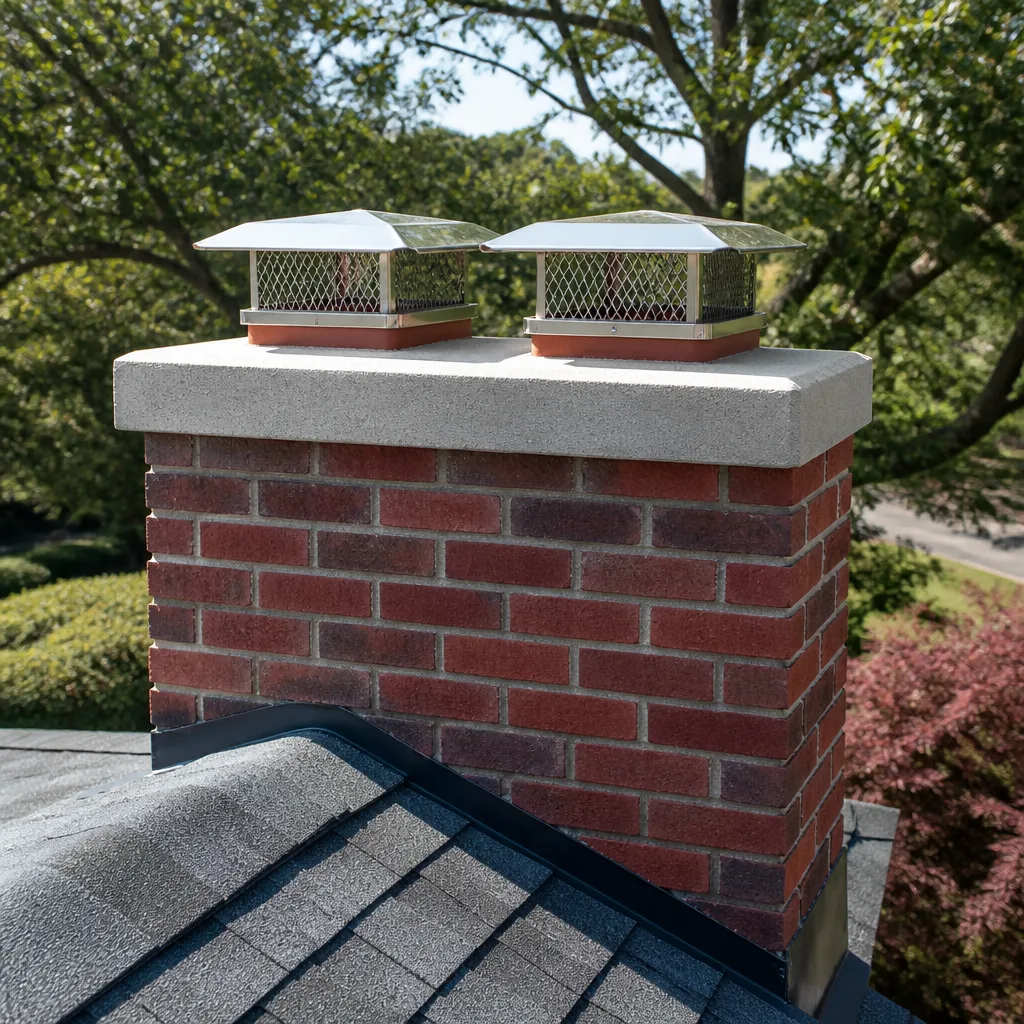
- Nesting material, leaves, or a fallen cap can block the flue. Birds, squirrels, and debris are the most common causes. A damaged chimney cap or crown is one way that happens, which is why we install chimney cap & crown protection so animals can’t get in.
In Highland Creek, the most common blockage we see is a bird’s nest or a buildup of leaves at the top of the flue, usually after several months of non-use. A blocked chimney doesn’t vent, and that’s when a fire start becomes dangerous. A simple sweep and inspection before burn season catches most of these. When we look at a chimney, we show you what we found and what it means, rather than just saying “you need work.” Camera inspection tells you whether it’s a blockage or a draft problem in about a minute.
Why can’t you use the chimney after a fire until it’s inspected?
After any chimney fire, the flue lining must be inspected before the chimney is used again. A chimney fire can crack clay tiles, warp a metal liner, or pull the joints apart, and none of that shows from the firebox. The fire can also deposit a new, brittle layer of creosote that will feed a second fire sooner. Using the chimney again without an inspection risks a repeat event and carbon monoxide intrusion through the cracks.
The post-fire inspection is not optional, and it’s not the same as a cleaning. Here’s what it involves:
- A visual inspection of the firebox and flue. For any hidden damage, a camera inspection of the flue interior is the right tool.
- A check of the liner joints and the cap. Cracks, gaps, and loose connections are the first things to look at.
- A look at the crown and flashing. Heat and water damage often show up at the top of the chimney first.
- A report on what we found and what it means. You should get a plain-language explanation with photos, so you can see the problem yourself.
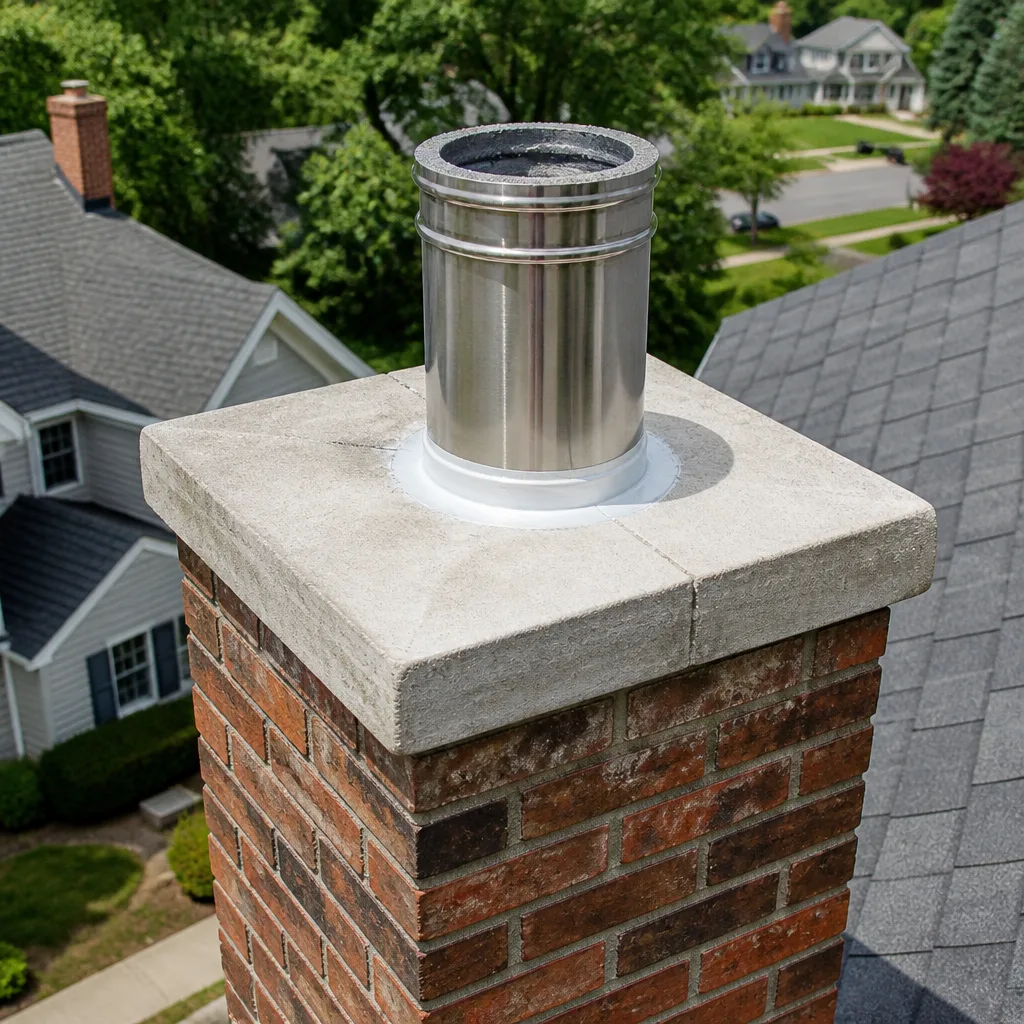
If the liner is damaged, the repair may be a full relining or a HeatShield ceramic restoration for the firebox and flue. HeatShield is a professional-grade resurfacing system that can address cracks and gaps without always needing a full liner replacement. When it’s not the right fit, a DuraFlex flexible liner is the alternative for wood, gas, or oil appliances. The point is that the repair depends on what the camera shows, not on a guess. If the chimney passes inspection, you can use it again. If it doesn’t, the fix is what protects the house.
What should Highland Creek homes have ready before burn season?
Preparedness is the work you do in October, not in January when there’s smoke in the room. Highland Creek has a mixed housing stock, from newer construction to older homes with original chimneys, and the needs differ. Here’s what we recommend every household with a fireplace or wood stove has ready before the first cold snap.
- A working carbon monoxide detector on every floor. Place one near the sleeping area and one on the main level. Test it monthly and replace the battery when the season starts.
- The right fire extinguisher. An ABC-rated dry chemical extinguisher is the standard for home use. Store it near the fireplace, but not so close that a fire could block it. Know how to use it before you need it.
- A cleared roof edge. Leaves, pine straw, and debris around the chimney cap and on the roof are fuel. Clear them before the season.
- A chimney sweep and inspection scheduled. Book it before the cold months, when schedules fill up.
- Emergency contacts. Post your local fire department’s non-emergency number and our number, (855) 337-1327, near the fireplace. We answer 24/7.
- A burn-tested supply of seasoned wood. Wet or green wood produces more creosote. Get your wood stacked and drying early.
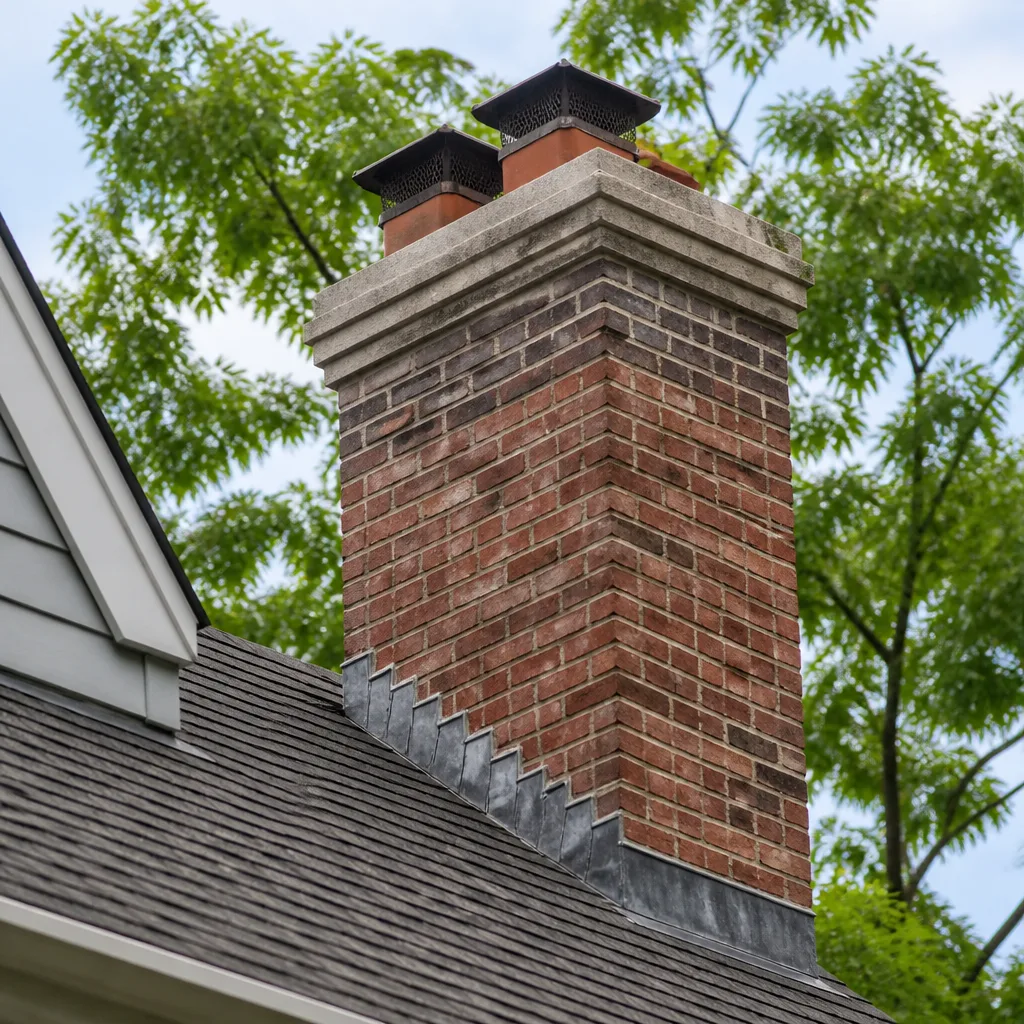
We also recommend a quick check that your chimney cap or crown is intact. A loose cap admits water and animals; a cracked crown lets water into the masonry, which freezes and splits in the colder months. That’s the start of a bigger repair, and a crown check now is a small job compared to a rebuild later.
How does carbon monoxide fit into chimney emergencies?
Carbon monoxide (CO) is the quiet emergency in the chimney world. It’s a colorless, odorless gas that comes from incomplete combustion. A blocked flue, a cracked liner, or a chimney that isn’t drafting properly can let CO back into the living space. A working CO detector is the only reliable way to know it’s there, and that’s why it belongs in any chimney emergency plan for a Highland Creek home.
Here’s what to know about CO and your chimney:
- Place detectors correctly. One on each floor, and one near the bedrooms. Follow the manufacturer’s placement instructions, especially for ceiling or wall height.
- Test the alarm before the season starts. A detector that doesn’t test is no detector at all.
- Treat an alarm as a real event. If the CO detector sounds and a fire is burning, get everyone outside and call 911. Don’t wait to see if the alarm stops.
- Know the symptoms. Headache, dizziness, nausea, and confusion that improve when you leave the house are warning signs. Get out and get checked.
- Schedule an inspection if you’ve had any. Even if the alarm didn’t sound, a chimney that’s venting poorly is a risk. An inspection finds the cause.
We treat every chimney inspection as an opportunity to check for the conditions that lead to CO intrusion. The local pro is licensed and insured as their state requires, and a camera inspection shows the liner’s condition with evidence you can see. If the liner has cracks or gaps, we’ll explain the options, including HeatShield restoration and a DuraFlex liner where it’s the right fit. You shouldn’t have to guess whether your chimney is safe.
How do you prevent chimney emergencies in Highland Creek?
The most important part of chimney emergency preparedness is the part you never notice: regular cleaning and inspection. Creosote is the fuel for chimney fires, and time is the biggest factor in how much of it builds up. A chimney that’s swept before the season starts has far less fuel to catch, and an inspection catches the cracks and gaps that allow CO intrusion. One service visit each year does more for safety than a shelf full of emergency gear.
Here’s a yearly routine that covers most Highland Creek households:
- Schedule a sweep and inspection before burn season. Late summer or early fall is the ideal window, before schedules fill.
- Have a camera inspection done. A camera shows the flue’s condition and confirms that the sweep cleared the deposits.
- Repair issues on the spot. A sweep without a repair plan is a guess. The cap, crown, liner, firebox, and flue work together as one system, and a weakness in one affects the others.
- Verify your dampers and controls move freely. Test them before the first fire.
- Check your detectors and extinguisher. Replace batteries, test alarms, and confirm the extinguisher is charged and in place.
- Keep your wood dry and your roof clear. Dry wood burns cleaner; a cleared roof removes an ignition source.
Our five services – sweeping, inspection, fireplace repair, structural chimney repair, and cap and crown installation – exist because chimney problems rarely stay in one part of the system. One visit can address the whole chimney. When you need a chimney sweep or a fireplace repair, the same team handles it, and the written estimate sets the price before we start.
Common Mistakes to Avoid
- Waiting to call 911 until the roar is obvious. The roar means the fire is already well-fueled. Call at the first reliable sign, not the last.
- Leaving the damper open during a chimney fire. Air feeds the fire. Close the damper and the firebox doors, and don’t reopen them to check.
- Assuming a quiet chimney means a safe chimney. Slow chimney fires can burn inside the flue for hours. An inspection is the only way to know.
- Burning a fire after a chimney fire without an inspection. Cracks and damaged liner joints let CO into the home. Get checked first.
- Skipping the CO detector. A home with a fireplace and no working CO detector has no way to detect the most dangerous chimney failure.
- Cleaning the chimney but not checking the cap and crown. A missing cap lets animals and water into the flue, which leads to the blockage and water damage that cause emergencies. That’s why we include chimney cap & crown work in our scope.
- Using wet or unseasoned wood. Green wood produces more creosote, which is the fuel for chimney fires. Dry your wood before the season.
See the difference
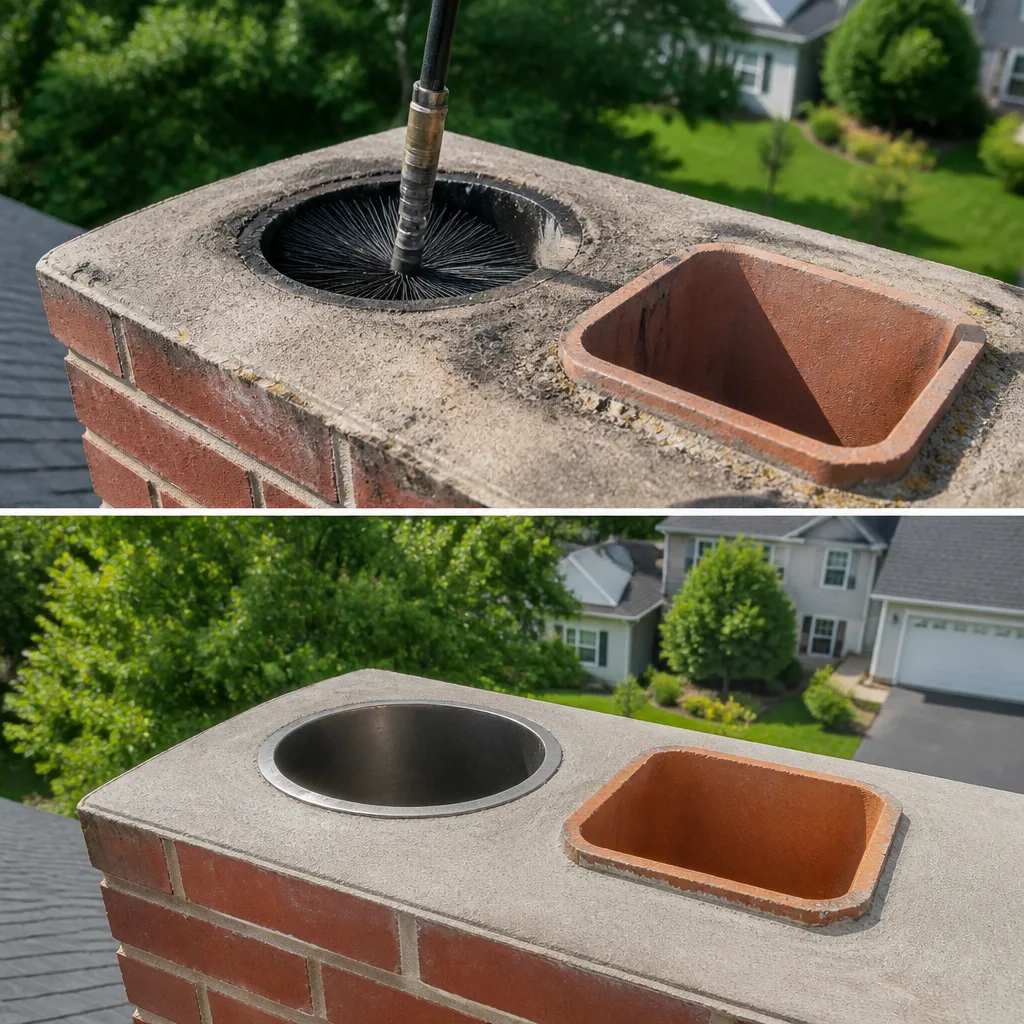
 Before
 After
 Before
 After
 Before
 After
When to Call a Professional
Call a professional if you’ve had a chimney fire, if your smoke or CO alarm has ever gone off with a fire burning, if smoke backs into the room with the damper open, or if it’s been more than a season since your last sweep. Call if you’ve never had an inspection on a home you recently bought in Highland Creek, or if you’ve had water coming in around the chimney. Those aren’t “maybe” situations. Chimney Sweep Highland Creek offers free estimates in Highland Creek, and a camera inspection gives you a report you can look at yourself. Call (855) 337-1327. We answer 24/7. Fast dispatch from 7am to 7pm, Sunday through Friday.
Frequently Asked Questions
A chimney fire usually sounds like a low, steady roar or rumbling, similar to a distant train or a jet passing overhead. It’s not the crackle and pop of a normal wood fire. You may also smell burning cardboard or hot metal and see thick smoke at the top of the chimney. Call 911 at the first reliable sign. Estimates are free if you need a post-fire inspection: (855) 337-1327.
No. Call 911, close the firebox doors and the damper to cut the air, and get everyone outside. Don’t put water on a hot flue or firebox, since that can crack masonry or warp metal. Let the fire department handle the fire, and have the chimney inspected before you use it again.
A flue blockage usually causes smoke to back into the room and can set off the CO detector; a draft problem is smoke spill that improves once the flue warms. Blockages get worse the harder you burn. A camera inspection tells you which you have in a few minutes. Call (855) 337-1327 for a free estimate.
A chimney fire can crack the clay liner, separate the joints of a metal liner, or leave a brittle layer of new creosote that catches fire again quickly. Using the chimney before an inspection risks a second fire and CO intrusion through the cracks. Get the inspection first, then use the chimney only if it passes.
A working carbon monoxide detector on every floor, an ABC-rated fire extinguisher near the fireplace, a cleared roof edge, a scheduled sweep and inspection, and emergency contacts posted. Also check that your damper opens and closes smoothly. If you don’t have an inspection on record, book one before the first fire.
An annual sweep and inspection before burn season covers most households. If you burn heavily, burn wood that’s not fully seasoned, or have any doubts after a fire event, get it checked sooner. A sweep without an inspection is a guess. Call (855) 337-1327 for a free estimate on both.
The Bottom Line
Chimney emergencies follow patterns. A roaring chimney fire, a smoke-filled room, a CO alarm with a fire burning – each has a clear response, and the homeowner who knows the pattern does the right thing in the first three minutes. Call 911 first. Close the damper and the air. Get everyone out. And don’t use a chimney after a fire until a professional has inspected it. The prevention is simpler still: a sweep and inspection before the season, a working CO detector, the right extinguisher, and a roof edge clear of debris. If something seems wrong with your chimney system, don’t guess. Call (855) 337-1327 for a free estimate.
Written by the team at Chimney Sweep Highland Creek.