
Last updated November 22, 2026
 Sweep & inspection
 Caps & crowns
 Flue relining
 Masonry repair
 Gas fireplace service
Level 1 sweep and inspection to the NFPA 211 annual standard - flue, crown, cap, and flashing checked and photographed
Chimney sweep logs do not sweep chimneys. They loosen some creosote - which then falls where a brush and vacuum still have to collect it.
Chimney Cleaning Cost Breakdown: The Highland Creek Homeowner’s Reference for 2026
That $99 chimney cleaning quote in your inbox almost always prices the flue sweep and nothing else. The inspection, the camera, the written report, and the time it takes to actually assess your system are all billed separately, or quietly skipped. That’s the reason two Highland Creek homeowners with identical-looking fireplaces can pay wildly different amounts and both walk away unsure what they bought. Cleaning isn’t a flat product. It’s a scope of work that changes with creosote stage, flue height, roof access, and appliance type. This reference breaks down every variable in plain terms so you can budget for the real number, not the teaser one.
Quick Answer
A typical chimney cleaning in Highland Creek runs $175 to $350 for a standard wood-burning flue with a basic inspection included. Add $75 to $150 when the job involves Stage 2 creosote, a steep roof, or an insert that has to be pulled. A full-service cleaning with camera inspection, written report, smoke chamber brushing, and a cap check usually lands between $275 and $450. The written estimate sets the final price, and it should be agreed before anyone climbs on your roof.
Styles & brands we work with
- Sweep & inspection
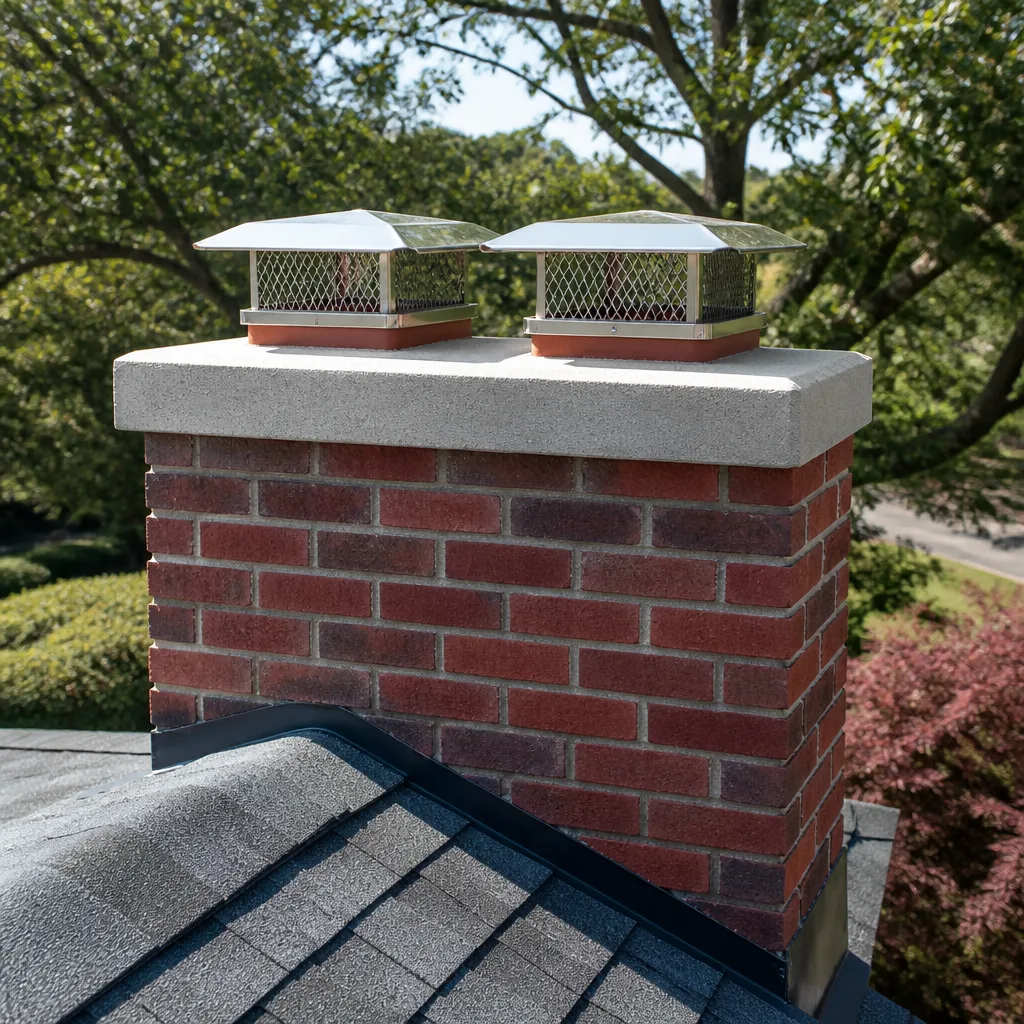
- Caps & crowns
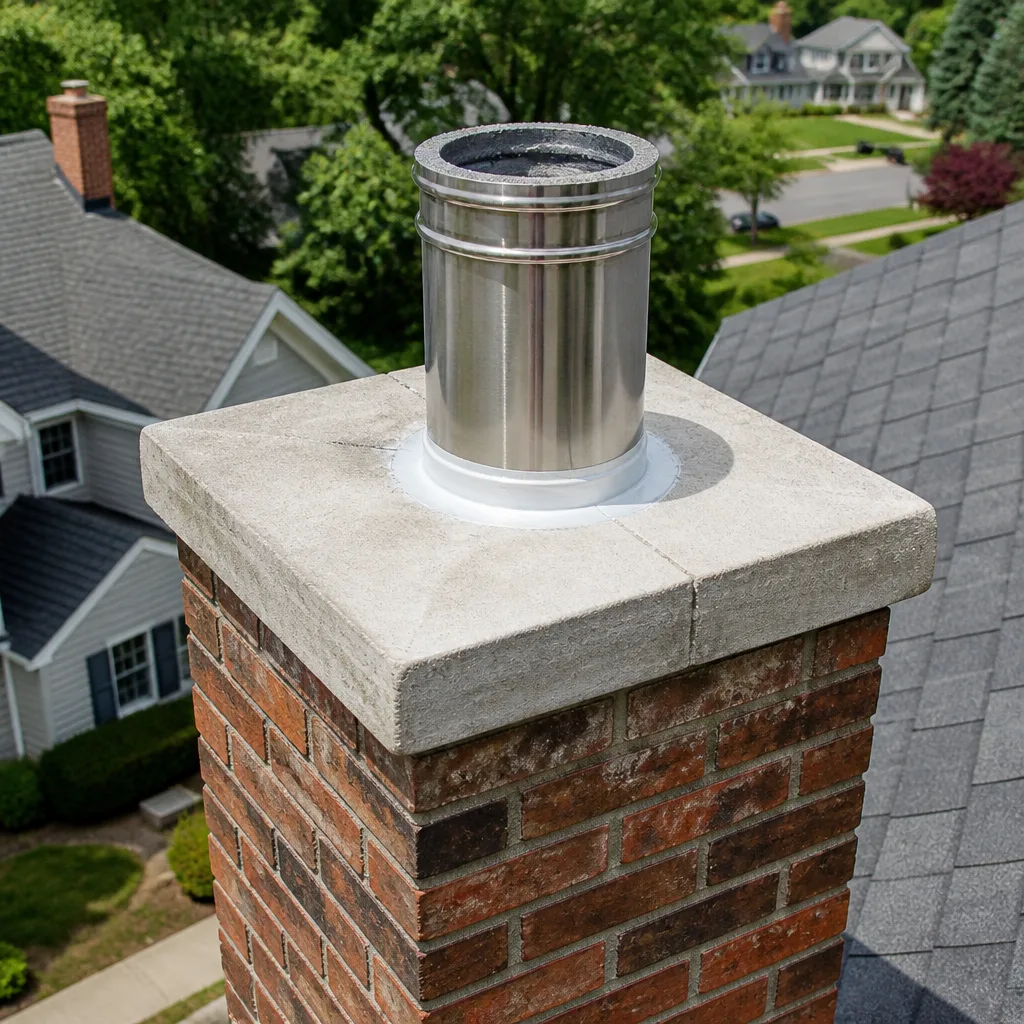
- Flue relining
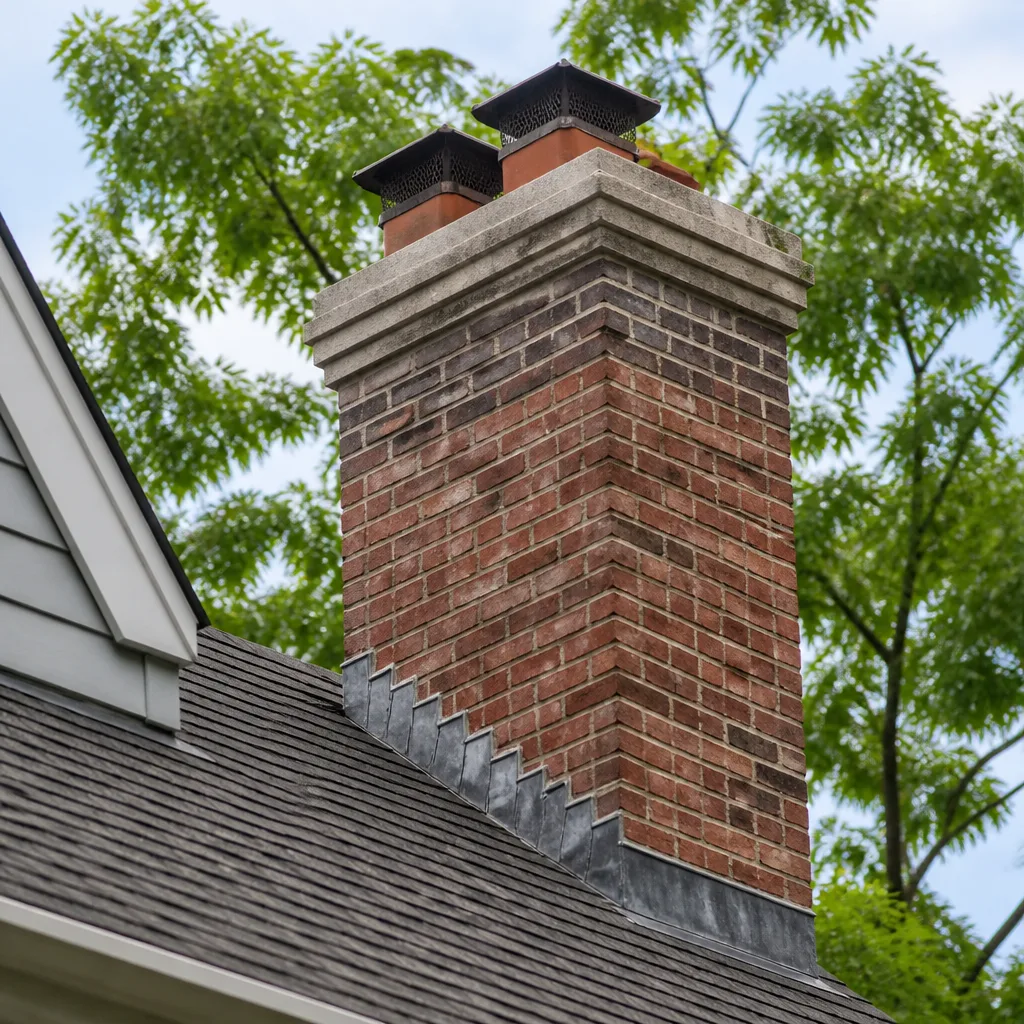
- Masonry repair
- Gas fireplace service
Table of Contents
- What’s Actually Included in a Baseline Sweep
- How Creosote Stage Changes the Price
- Height, Access, and Insert Type: The Hidden Cost Drivers
- Associated Repairs: What Cap, Damper, Crown, and Flashing Work Costs
- What a Fair All-In Price Looks Like in Highland Creek in 2026
- How a Professional Cleaning Actually Goes, Step by Step
- Common Mistakes to Avoid
What’s Actually Included in a Baseline Sweep
A baseline sweep is the flue only. That’s the honest definition, and it’s the piece most cut-rate quotes price. A technician runs a rotary brush or a poly whip through the flue to remove soot and glazed creosote from the flue walls, vacuums with a HEPA setup to keep the room clean, and does a visual look at what’s reachable from the damper and the top. That’s it. Everything past that is either a line item or an omission.
Here’s what routinely gets quoted as an add-on, and what a full-service job should include without a separate charge:
- Camera inspection of the flue interior, including the smoke chamber and the top of the firebox. Typically $75 to $150 on its own.
- Written report with photos that you keep. This matters for insurance and for resale. Often sold as a separate inspection service.
- Smoke chamber brushing, which is different work from a flue sweep. The smoke chamber is the sloped zone above the damper, and it’s where a lot of creosote hides. A flue-only sweep doesn’t touch it.
- Firebox cleaning and ash removal from the base.
- Cap and crown check, plus a look at the flashing and the mortar joints at the crown.
In our experience, this is where Highland Creek homeowners get surprised. The $99 ad is real, but it buys the flue sweep. When the technician arrives and finds a smoke chamber that needs brushing or a cap that’s cracked through, the price climbs on the day, and the homeowner has no way to judge whether the addition was necessary. A sweep without an inspection is a guess. We do both, and we put the scope in writing before the appointment.
How Creosote Stage Changes the Price
Creosote is the single biggest driver of cleaning cost, and it’s the variable most quotes ignore. There are three stages, and the labor to remove each is different enough that a Stage 2 or Stage 3 job can cost two to three times a Stage 1 clean.
- Stage 1: soot and light flaky deposits. Standard rotary brushing handles this quickly. This is the baseline $175 to $350 job.
- Stage 2: glazed, hardened deposits with a crusty or tar-like surface. Standard brushing skips over it. It takes chemical treatment, longer dwell time, and mechanical agitation to break the glaze. Expect $300 to $550.
- Stage 3: heavy glazing, often with restricted flue opening. This is a real fire hazard and the job can run $450 to $800 or more if the deposits are dense enough that mechanical removal risks damaging the flue. In some cases the honest recommendation is relining rather than repeated cleaning.
What drives a chimney toward Stage 2 or 3? Burning unseasoned wood, running the fire with the damper closed too long, smoldering overnight loads, and skipping annual cleaning for several seasons. Highland Creek’s climate matters here: our heating season runs long enough that most regular burners put serious hours on the chimney between November and March, so creosote accumulates faster than a casual three-fires-a-year household would expect. Two or three seasons of unseasoned wood can turn a Stage 1 flue into a Stage 2 one.
Stage 3 creosote is a fire risk, not a maintenance item. Chimney fires happen when glazed creosote ignites, and a fire that never gets noticed can crack flue tiles and let heat into the framing. That’s the reason a Stage 3 finding is the point where cost stops being about cleaning and starts being about what the flue can safely tolerate.
Height, Access, and Insert Type: The Hidden Cost Drivers
Two chimneys with the same creosote load can price differently because the job site changes the labor. These are the variables we check first when building an estimate:
- Chimney height and roof pitch. A flue running 15 feet from the firebox to the cap is quick work. A 30-foot exterior chimney on a steep pitch takes longer to access safely, and the technician may need roof anchors and a second person on the ground. Add $50 to $150.
- Access to the roof. A walkable low-slope section is easy. A steep roof, a skylight in the way, or a tight setback between the chimney and the ridge all slow the job.
- Insert type. A freestanding wood stove or a fireplace insert often has to be partially pulled to access the flue and the smoke chamber. Insert jobs add $100 to $200 depending on the unit.
- Appliance fuel type. Wood is standard. Gas and oil appliances need different cleaning and inspection procedures, and an oil flue carries its own soot characteristics that change the tools used.
- Flue geometry. Offset flues, tees, and older masonry chimneys with tile liners in poor condition all take longer than a straight flue with a healthy liner.
- Debris in the base. Nesting material, leaves, or a fallen cap screen in the smoke shelf means extra vacuum time.
None of these are upsells. They’re labor. When a Highland Creek homeowner gets two quotes that differ by $150 for what sounds like the same job, the gap is almost always one of the six items above. Ask both contractors to itemize the scope, and the difference will make sense.
Associated Repairs: What Cap, Damper, Crown, and Flashing Work Costs
Cleaning reveals the system. Most chimneys that get swept for the first time in several seasons turn up at least one associated repair, and knowing the ranges in advance takes the sting out of the conversation. These are typical estimates for the Highland Creek market in 2026:
| Repair | Typical Cost Range |
|---|---|
| Chimney cap replacement (standard single-flue) | $175 to $400 |
| Custom or multi-flue cap | $350 to $700 |
| Top-sealing damper installation | $350 to $650 |
| Crown coat or crown repair | $300 to $800 |
| Flashing reseal | $200 to $450 |
| Firebox resurfacing with HeatShield | $600 to $1,400 |
| Partial reline section | $900 to $1,800 |
| Full flue reline (wood, gas, or oil) | $2,200 to $5,500 |
The crown is worth a word. It’s the concrete cap at the top of the masonry that sheds water away from the flue, and when it cracks, water gets into the chimney structure. In Highland Creek’s swing between humid summers and freeze-thaw winters, a hairline crown crack widens over a season or two until the freeze pushes it open. Resealing a crown early is the difference between a $300 repair and masonry work. A missing or broken cap is the other quiet one: it lets rain in, and it lets birds, squirrels, and raccoons in. Cap and crown work is usually done at the same visit as a sweep, and it’s the single most cost-effective thing a homeowner can do to protect the system.
Cap, crown, liner, firebox, and flue are interconnected. Treating any one of them in isolation is how small problems become big invoices.
What a Fair All-In Price Looks Like in Highland Creek in 2026
A fair all-in price for a full-service cleaning and inspection in the Highland Creek market in 2026 is $275 to $450 for a standard wood-burning chimney in Stage 1 condition. That price should include the flue sweep, a camera inspection, a written report with photos, smoke chamber brushing, and a visual check of the cap, crown, flashing, and firebox. It should not be padded with a “diagnostic fee” or a surcharge for a look at the cap.
Where the number moves:
- Straightforward, single-story, straight flue, Stage 1: $275 to $325.
- Two-story exterior chimney, Stage 1, standard insert: $325 to $400.
- Stage 2 creosote, or an insert that has to be pulled: $400 to $550.
- Stage 3 or heavy glazing with liner assessment: $550 to $800.
- Full-service cleaning with a cap or crown repair done the same visit: $500 to $1,100, depending on what’s repaired.
What a fair price is not: it’s not “cheap.” A $99 sweep in Highland Creek is a flue-only clean without the inspection, and the homeowner ends up paying twice, once for the advertised number and again when a second contractor finds the smoke chamber or the cap. The written estimate sets the final price. Ask for it in writing, ask what’s included, and ask what isn’t. Every honest contractor in Highland Creek will answer those three questions without hesitation.
One more piece of context for the 2026 market: material costs for cap, crown, and liner work have drifted up with the rest of the building supply chain, but cleaning labor is still the smaller half of most invoices. Repairs are where the dollars concentrate, and repairs are where a second opinion is worth asking for.
How a Professional Cleaning Actually Goes, Step by Step
Understanding the process is how you judge the invoice. A full-service cleaning in Highland Creek follows roughly this order, and a contractor who skips step 3 or step 6 is cutting the scope that justifies the price:
- Pre-job walkthrough. The technician looks at the firebox, damper, hearth, and the exterior of the chimney before any drop cloths go down. Any existing issues get photographed and you see them.
- Floor protection and HEPA vacuum setup. Drop cloths around the hearth, vacuum running before the first brush goes in, so no soot escapes into the room.
- Firebox and smoke chamber clean. This is the part a flue-only sweep skips. The smoke chamber gets brushed down by hand or with a rotary tool, and the firebox floor and walls get cleaned.
- Flue sweep from the top or bottom. A rotary brush on a flexible rod, sized to the flue, runs the full length. The technician works from whichever end the chimney allows.
- Camera inspection. The camera runs the flue to check for cracks, gaps in the tile joints, and leftover glazing. It also looks at the top of the firebox and the smoke chamber.
- Cap, crown, and flashing check. From the roof, the technician looks at the crown for cracks, the cap for damage, and the flashing where the chimney meets the roof deck.
- Report and photos. A written report with photos of what was found, what’s fine, and what needs attention. Anything urgent gets flagged, and anything that can wait is called out as a wait.
Expect 45 minutes to 90 minutes for a standard job, longer for Stage 2 or Stage 3 creosote or an insert. If a technician is on and off the roof in 20 minutes with no camera, no report, and no look at the smoke chamber, you paid for a flue-only clean regardless of what the invoice calls it.
When liner work does come up, professionals use specific manufacturer systems rather than a generic liner. DuraFlex flexible liner systems cover wood, gas, and oil appliances, and HeatShield ceramic repair is the standard route for resurfacing a firebox or flue that doesn’t need full replacement. We carry these because they’re what professionals use on their own homes, and they’re what a repair built to last actually requires. If a contractor says the liner has to be replaced without showing you the camera footage, get a second look. A liner replacement is the largest line item a homeowner ever sees on a chimney invoice, and it should always be backed by evidence you can see on a screen.
For the full scope of what a cleaning visit covers beyond the flue itself, the Chimney Sweep Highland Creek service page lays out the complete inspection and cleaning process. If a cleaning turns up firebox or damper damage, fireplace repair work is handled by the same team, and if the cap or crown has to change, chimney cap & crown installation covers the full replacement. The point of a single-provider model is that a homeowner doesn’t need to source a separate mason, sweep, and cap installer for one system.
Common Mistakes to Avoid
- Buying the $99 ad without reading what’s included. A cut-rate price is a flue-only sweep. It’s a legitimate service, but it’s not a full cleaning and inspection, and it won’t tell you whether your system is safe.
- Skipping the annual inspection because the flue looks clean. Creosote glazing and cracked flue tiles aren’t visible from the firebox. The camera and the roof check are where the findings come from.
- Cleaning on a seasonal schedule instead of a condition schedule. A Highland Creek household that burns wood most evenings from November to March accumulates creosote faster than a once-a-year January sweep accounts for. If you burn a lot, plan a mid-season check.
- Letting a crown crack go through one freeze-thaw cycle. Highland Creek gets winters cold enough to open a hairline crown crack into a real masonry problem in a single season. Reseal it early.
- Burning unseasoned or green wood to save on fuel. It costs more in Stage 2 cleaning than it saves at the woodpile. Seasoned wood burns cleaner and the flue reflects it.
- Running the fire with the damper too closed. Low, smoldering fires produce the most glazed creosote. A hot, efficient fire keeps the flue cleaner.
- Approving liner work with no camera evidence. Ask to see the footage before you approve a reline. A credible proposition is one you can verify on a screen, not one you take on trust.
- Having no cap on the chimney at all. Rain, debris, and animals come straight down the flue. A cap is inexpensive and basic.
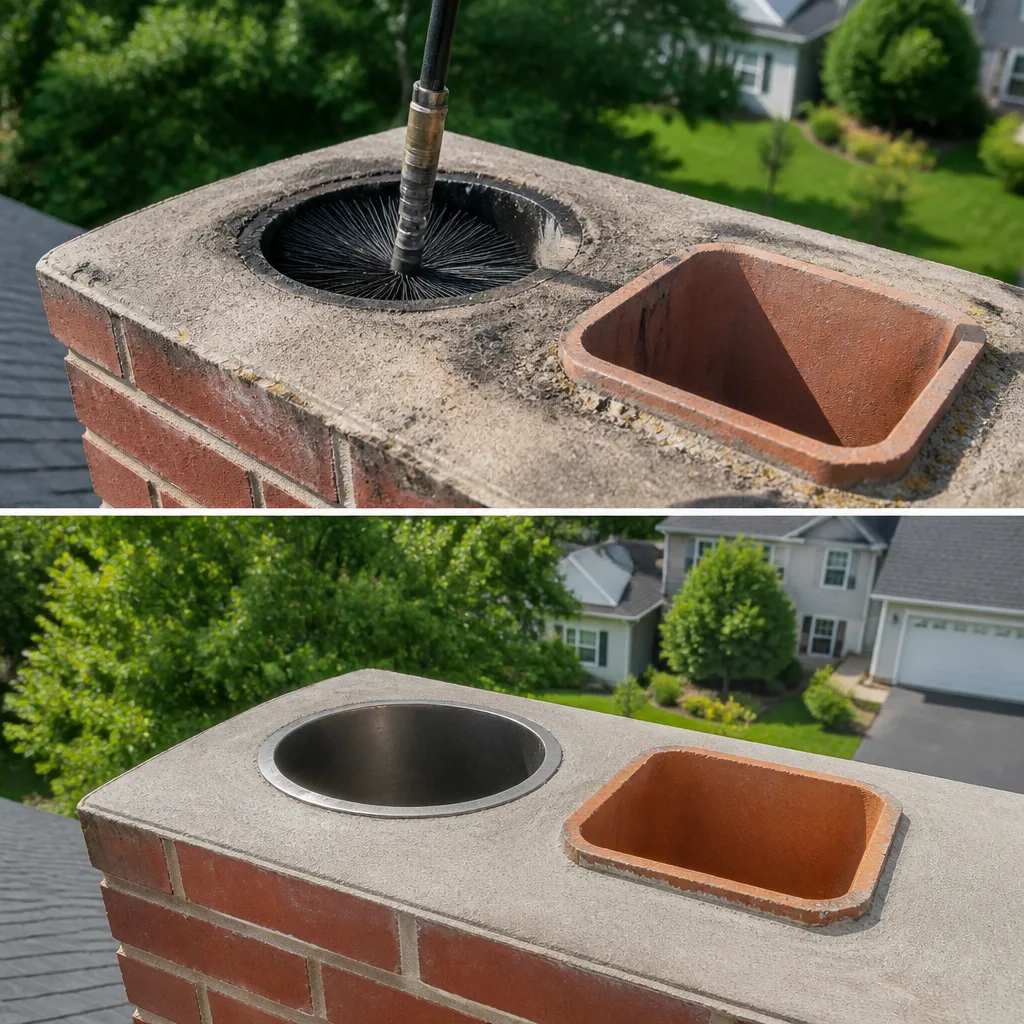
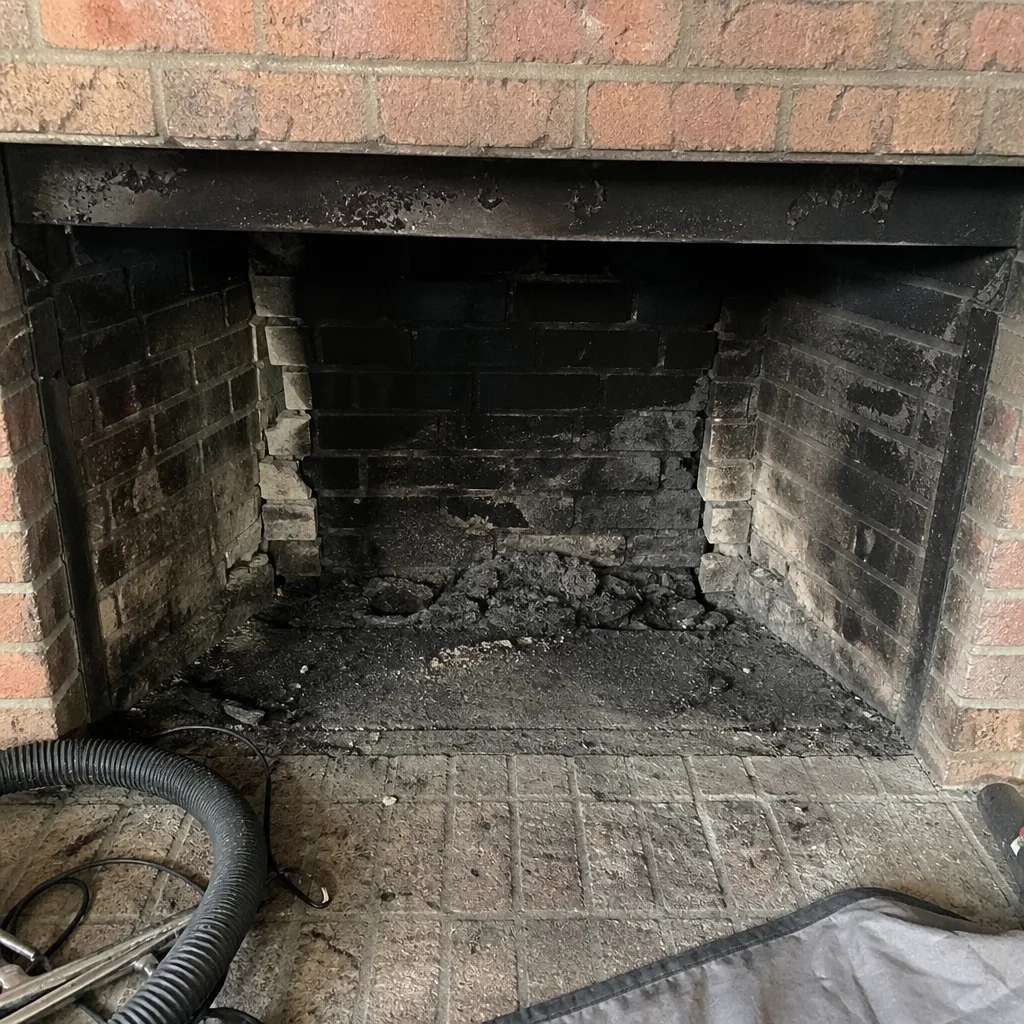
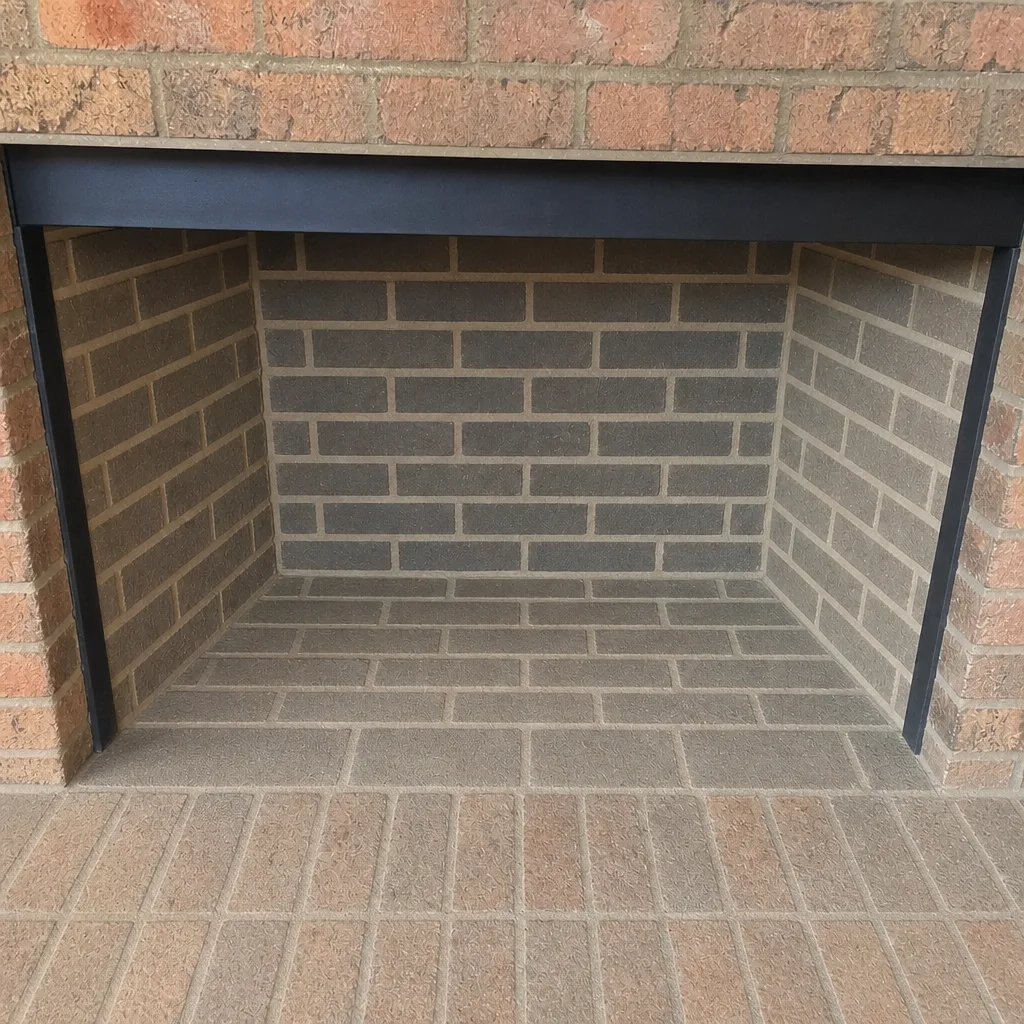
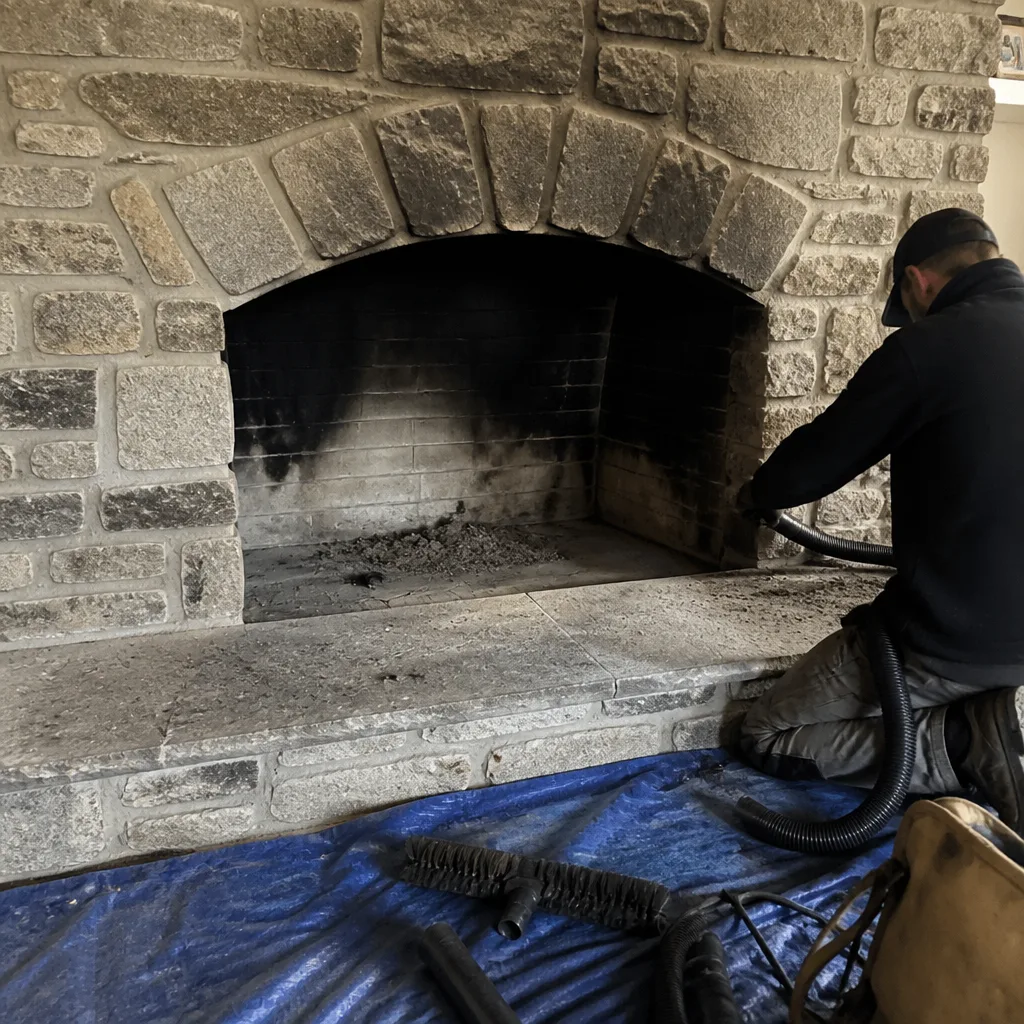
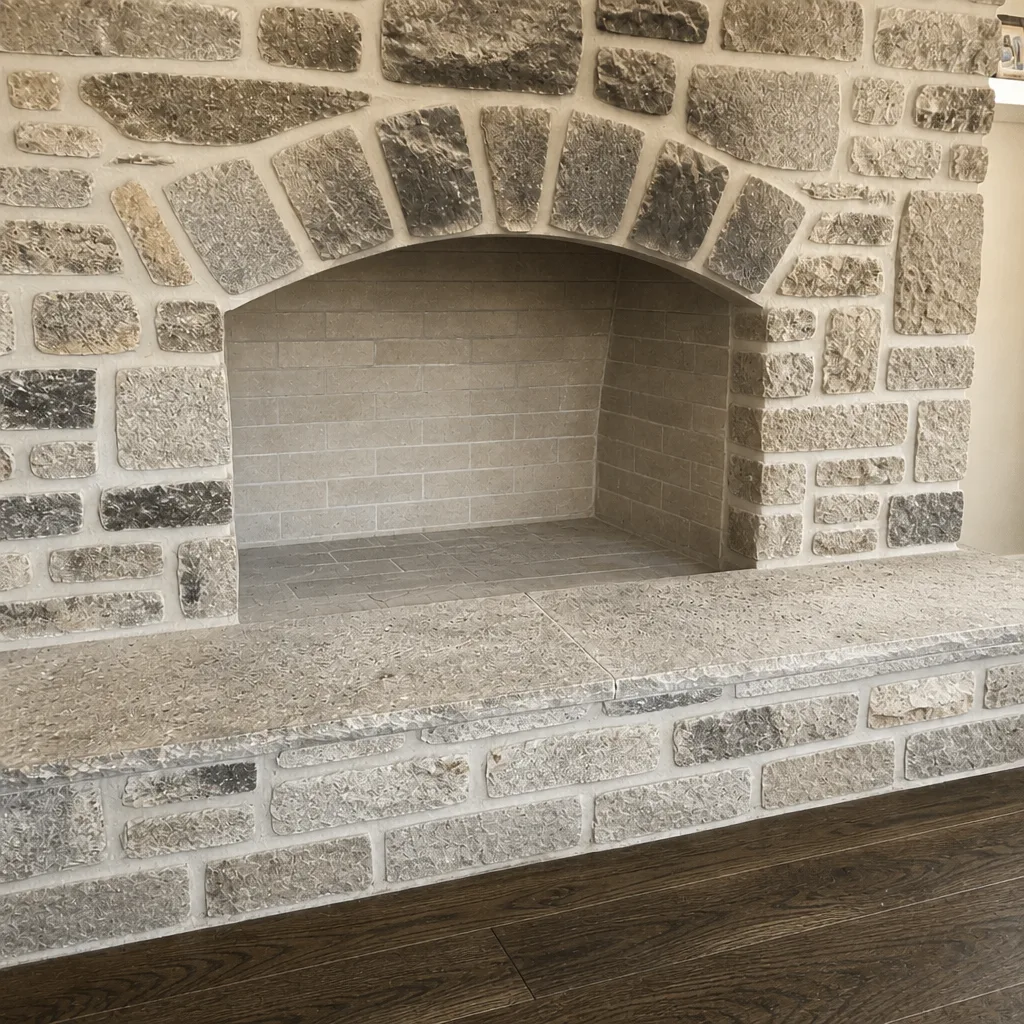
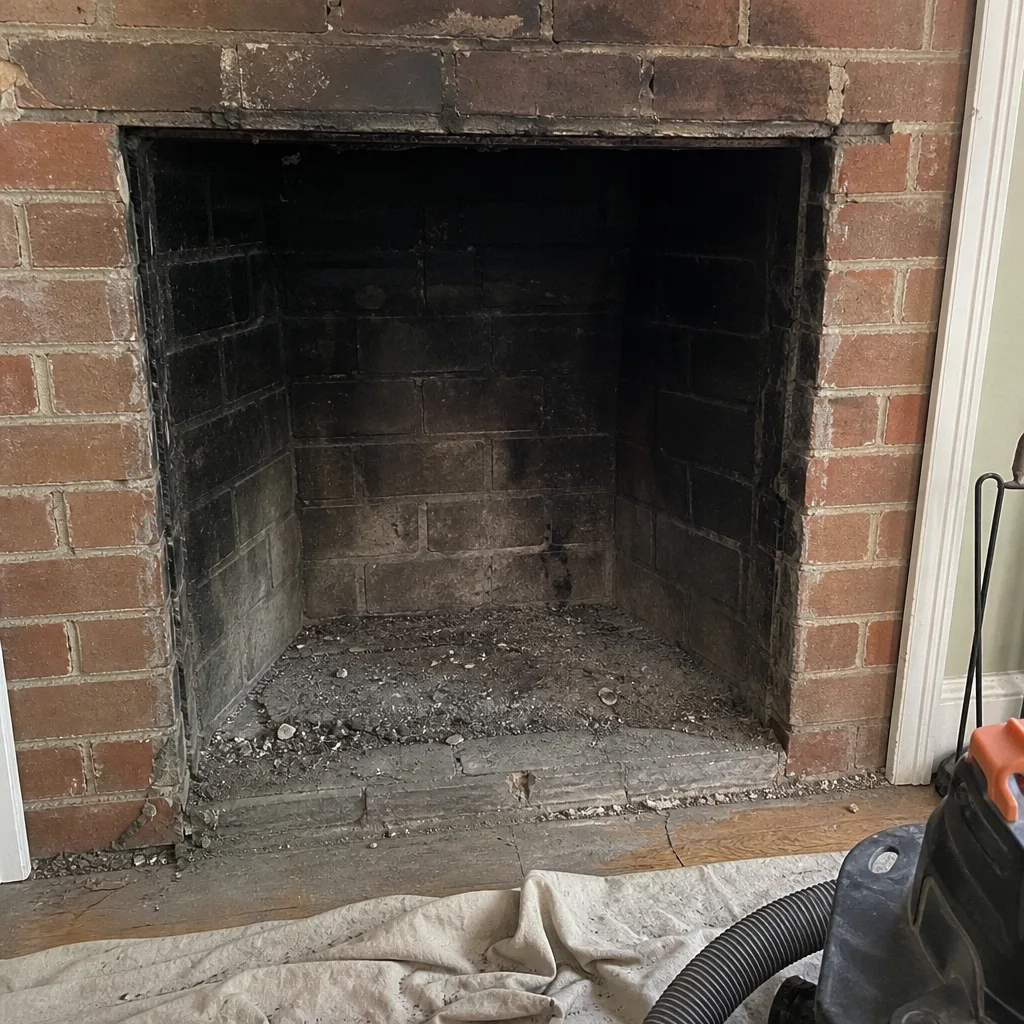
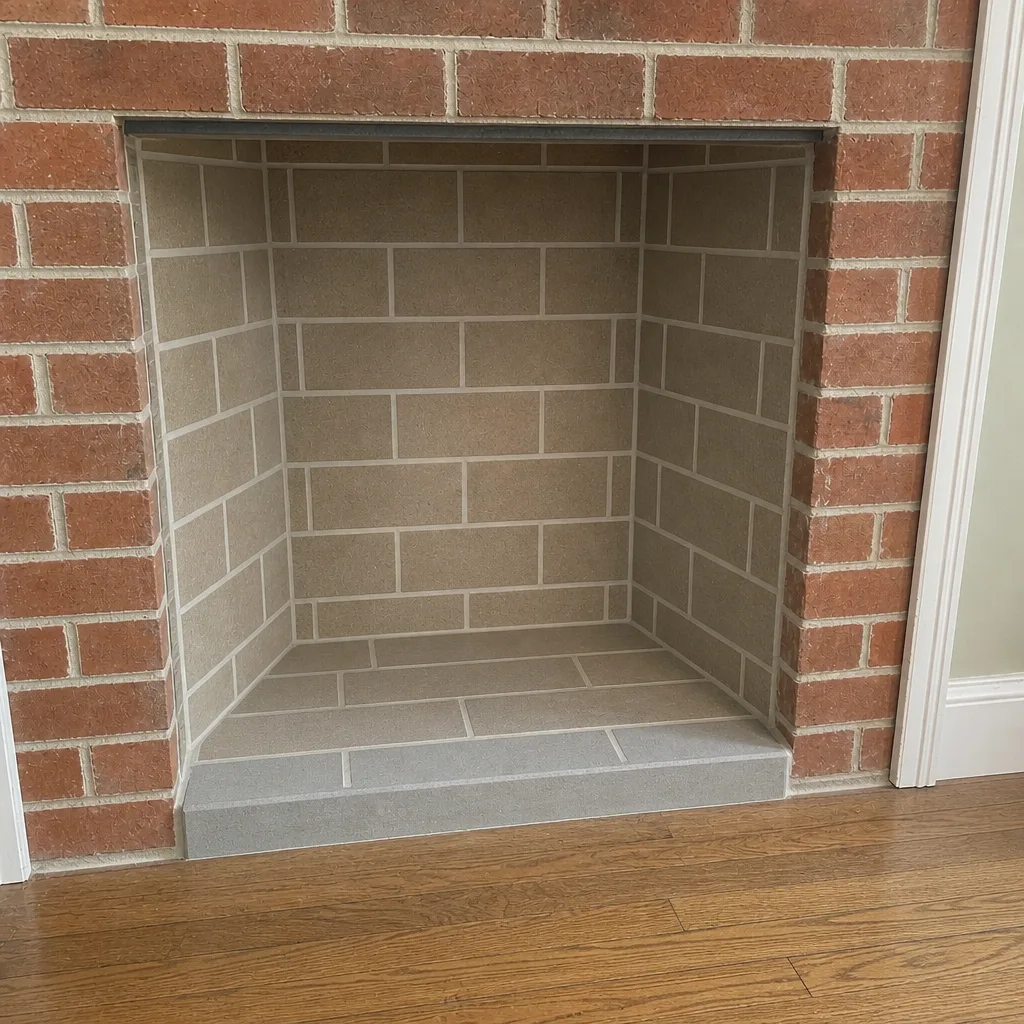
See the difference
 Before
 After
 Before
 After
 Before
 After
When to Call a Professional
Some chimney problems need professional eyes, not a homeowner’s ladder. Call if you’ve burned more than a cord of wood since the last cleaning, if you notice a strong creosote or smoky smell from the fireplace even when it’s not in use, if the fire is slow to draw or smoke rolls into the room, if the masonry shows white staining or crumbling mortar, if the cap is missing or cracked, or if a slow, gummy deposit is visible when you look up the flue from the firebox. Call if you’ve never had the chimney inspected and you don’t know the last time it was swept. Call if you’re buying or selling a house and the inspector flagged the chimney, or if your insurer is asking for documentation. Any of these is a reason to get a written assessment.
Chimney Sweep Highland Creek offers free estimates in Highland Creek. Call (855) 337-1327. We answer 24/7. Fast dispatch from 7am to 7pm, Sunday through Friday. Our technicians have up to 13 years of experience, and the local pro we connect you with is licensed and insured as the state requires.
Frequently Asked Questions
A standard chimney sweep in Highland Creek runs $175 to $350 for a flue-only clean with a visual check, and $275 to $450 for a full-service cleaning with a camera inspection, written report, and smoke chamber brushing. Stage 2 or Stage 3 creosote, a steep roof, or an insert that has to be pulled adds $75 to $200. The written estimate sets the final price, and the estimate itself is free. Call (855) 337-1327 for an exact quote.
A $99 quote is a flue-only sweep. It doesn’t include the camera inspection, the written report, smoke chamber brushing, or a look at the cap and crown. It’s a legitimate service for a well-maintained chimney that just needs soot removal, but it won’t tell you whether the flue, cap, or crown has a problem. If you want the full picture, ask what’s included and what isn’t. Call (855) 337-1327 to price a full-service clean.
Chimneys should be swept once per heating season in Highland Creek, and more often if you burn more than a cord of wood or burn unseasoned wood. The old rule of thumb is that a chimney needs cleaning whenever a quarter inch of soot or creosote has built up on the flue walls, and a heavy burner will hit that mark before a once-a-year visit. If you burn most evenings from November to March, plan a mid-season check. Call (855) 337-1327 to schedule a sweep.
Creosote builds up and can glaze into Stage 2 or Stage 3 deposits, which is a real fire hazard and can cost two to three times as much to remove. A chimney fire can crack flue tiles and let heat reach the framing, and it can happen without the household noticing. Restricted airflow also increases carbon monoxide risk on gas appliances. The cost of skipping is not just a bigger cleaning invoice; it’s a system that can fail in a way no one detects until it has already failed. Call (855) 337-1327 for a cleaning and inspection before the next heating season.
Not always, and you shouldn’t approve a liner replacement without camera evidence you can see yourself. A cracked or deteriorated flue tile, a gap at a joint, or heavy Stage 3 glazing can justify relining, but a lot of what gets called “needs a new liner” can be handled with HeatShield ceramic resurfacing at a fraction of the cost. Ask to see the camera footage, ask what the specific defect is, and ask what the alternative to a full liner replacement is. Estimates are free. Call (855) 337-1327 and we’ll show you what we found and what it means.
No. A sweep without an inspection is a guess. The sweep removes soot and glazing from the flue, but it doesn’t verify the flue tiles, the cap, the crown, or the smoke chamber. The inspection is what turns a cleaning into a safety check, and it’s the piece that produces the written report your insurer or buyer may ask for. Every full-service clean from Chimney Sweep Highland Creek includes the camera inspection and the report. Call (855) 337-1327 for a free estimate.
The Bottom Line
The number on a Highland Creek chimney cleaning invoice is a window into the scope of work, not a contest over contractor pricing. A flue-only sweep is a different service from a full-service clean with camera inspection, written report, smoke chamber brushing, and a cap-and-crown check, and the price gap between them is honest. Creosote stage is the biggest variable: a Stage 2 or Stage 3 job costs two to three times a Stage 1 clean, and it’s the reason regular annual cleaning saves money in the long run. Chimney height, roof access, and insert type are labor variables, not upsells. A fair all-in 2026 price for full-service cleaning and inspection is $275 to $450.
The other bottom line is simpler: nothing should be recommended without camera evidence you can see for yourself, and any honest contractor should tell you plainly when a repair can safely wait. Fixing it right the first time, with the right material for the specific repair, is how a chimney system stops generating invoices.
When you’re ready for a written scope and a real number, call (855) 337-1327 for a free estimate. We answer 24/7. Fast dispatch from 7am to 7pm, Sunday through Friday. For the sweep itself, our chimney sweep service covers the full Highland Creek process from the firebox to the cap. The local pro we connect you with is licensed and insured as the state requires, and the estimate is free.
Written by the team at Chimney Sweep Highland Creek.